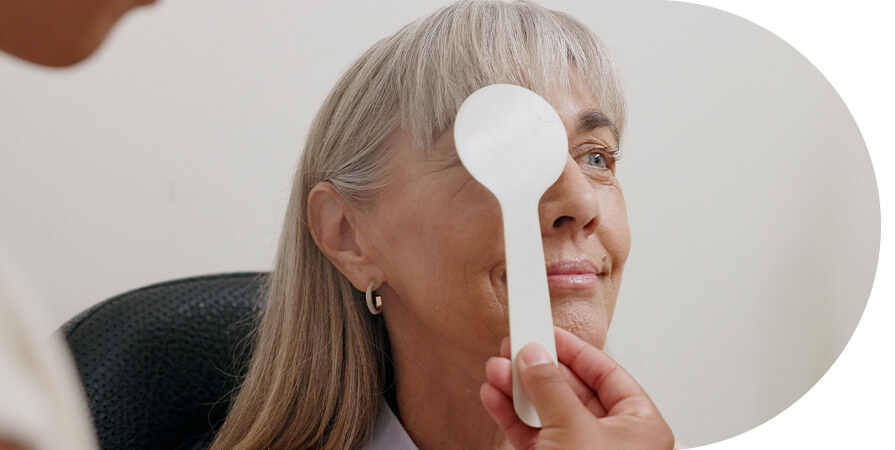
Protecting Your Ocular Health
Many eye diseases develop without obvious symptoms. Routine eye exams are the most reliable way to screen for eye diseases and catch signs of problems early.
Our experienced team of optometrists is proficient in the screening, detection, and management of various eye conditions, including dry eye, glaucoma, AMD, cataracts, and more. We use diagnostic technologies to provide a thorough evaluation of your eye health.
We’re here to help you care for your eyes now and into the future. Book your eye exam today.
Book Appointment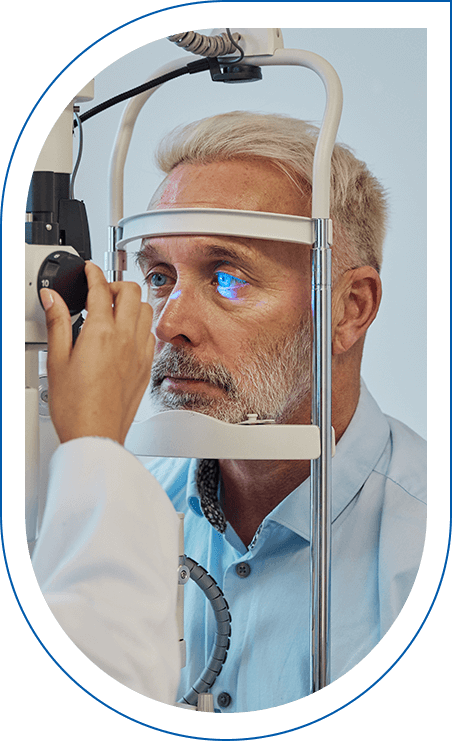

What Is Dry Eye?
Dry eye disease is an uncomfortable condition that causes stinging, burning, scratchy, or gritty feeling eyes. It is caused by an imbalance of the tear film, either due to poor chemical composition or an insufficient amount of tears.
Proper lubrication is necessary for your eyes to feel comfortable and to stay healthy. If you’re experiencing symptoms of dry eye, let us know during your appointment. We’ll provide a thorough evaluation and recommend treatments to help restore your comfort.
We offer specialty eye drops, eyelid hygiene products, and Blephaderm ointment, which can tackle stubborn dry eye when over-the-counter drops aren’t sufficient.
Other Common Eye Diseases We Help Manage
As many eye diseases do not present noticeable symptoms during their early and most treatable stages, you may not be aware that you have a condition until vision loss has occurred.
At Durham Vision Care, we monitor your eyes through routine, comprehensive exams that check for early signs of eye diseases. The earlier we detect a condition, the more effective the treatments can be.
Detection methods and recommended treatment plans vary depending on the condition. We will work with you to find the right treatment that suits your needs and your life.
Learn more about the conditions we manage:
Cataracts
A cataract forms when the lens inside your eye hardens and becomes cloudy. Cataracts can be a result of the normal aging process, although they can appear congenitally in infants.
Cataracts can also occur at an earlier age due to systemic conditions, such as diabetes, hypertension, chronic kidney disease, and autoimmune disorders. Other causes of cataracts include UV damage, trauma, and certain medications, such as corticosteroids.
We treat cataracts through ongoing monitoring, updating your prescription to improve visual clarity, and eventually cataract surgery co-management, when required.
Glaucoma
Glaucoma is a group of eye diseases characterized by damage to the optic nerve. This damage is often caused by a build-up of internal pressure within the eye, called intraocular pressure (IOP), although normal-tension glaucoma is also possible. Over time, the damage to the optic nerve can cause peripheral, then central vision loss.
Glaucoma can be caused by genetics, extreme refractive errors (such as high myopia), eye injuries, certain medications, and systemic health conditions, including heart disease, diabetes, and hypertension.
We screen for glaucoma through OCT scans, retinal imaging, eye pressure checks, and visual field assessments.
Age-Related Macular Degeneration (AMD)
AMD is a progressive disease that impacts central vision. It is characterized by damage to the macula, which is a small area of the retina responsible for your central and most colour vision.
There are two types of AMD: dry and wet. Dry AMD accounts for about 90% of cases and progresses slowly, as the central macular tissue degenerates over time. Wet AMD progresses rapidly, caused by leakage and bleeding of weak blood vessels under the macula.
Risk factors for AMD include genetics, smoking, extensive UV exposure, and cardiovascular disease. We screen for AMD through retinal imaging and OCT scans, and will refer patients to a specialist when necessary.
Diabetic Eye Disease
Diabetic eye disease refers to a group of diseases that occur as a complication of diabetes. This includes diabetic retinopathy and diabetic macular edema, along with an increased risk of developing cataracts and glaucoma.
Diabetic eye disease is caused by prolonged periods of high blood sugar, which damages the blood vessels in the retina. These blood vessels can leak into the eye, causing blurry vision and damaging eyesight. If left untreated, diabetic eye disease can cause serious vision impairment.
We monitor people with diabetes carefully for signs of diabetic retinopathy. We use OCT scans and retinal imaging to keep a close watch on eye health.
Conjunctivitis (Pink Eye)
Conjunctivitis, also known as pink eye, has many forms. It can be caused by a bacterial or viral infection, which is contagious to others, or through an allergic reaction or chemical exposure. It is characterized by the inflammation of the conjunctiva, which is the thin, transparent layer that covers the front of the eye and the eyelid.
It’s important to have your eyes assessed when you experience symptoms of conjunctivitis. This allows your optometrist to determine the cause of your symptoms and prescribe an appropriate treatment.
Flashes and Floaters
Floaters are translucent specks of various shapes and sizes. They are caused by small flecks of protein or other matter that are trapped in the fluid inside the eye and occasionally pass in front of your line of view. Generally, floaters are harmless.
However, if you notice new or a sudden increase in floaters, especially when accompanied by flashes of light, you may be experiencing an urgent condition, such as a retinal hole, tear, or detachment. With any significant and sudden changes to your vision, you should always call us for a comprehensive examination to determine the cause.
Our Diagnostic Technology
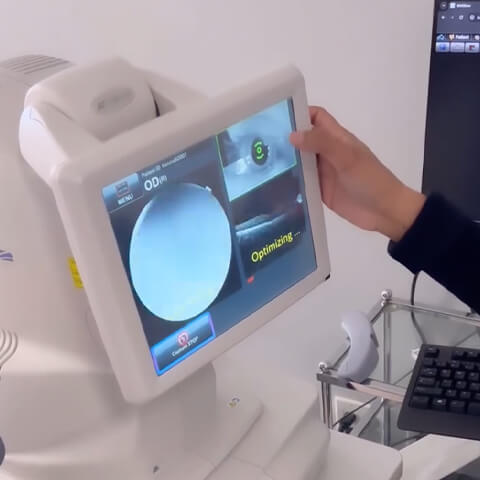
Our diagnostic technology serves as a powerful tool to enhance our standard of care for all patients. Whether your eyes are completely healthy or you’re dealing with an ocular condition, routine imaging and testing provide us with a baseline of your eyes and vision that we can use to monitor your eye health over time.
Each technology offers a distinct view of your eye or visual health. Our retinal imaging device captures detailed images of the interior of your eye, while our OCT produces a cross-sectional image of its layers. Learn more about the devices we commonly use to screen for eye conditions.
Retinal Imaging
Retinal imaging cameras capture a high-resolution image of the inside of your eye. This includes your retina, the light-sensitive tissue lining the inside of your eye, as well as the optic nerve and blood vessels.
Retinal imaging is an important part of routine monitoring and can be used to screen for AMD, glaucoma, and diabetic eye disease.
OCT Scans
Optical coherence tomography (OCT) scans use light waves to map the different layers of your retina. This creates a cross-sectional image of the retina that allows us to measure the thickness of each layer, which can indicate changes to your eye health that may not be visible through retinal imaging or a microscope.
OCT can be used to monitor your eyes for signs of diabetic eye disease, glaucoma, and AMD.
Visual Field Testing
Visual field testing assesses the entire area that your eyes can see in any direction while fixed on a central point. In other words, visual field testing evaluates your peripheral vision. Completing this test allows us to objectively measure your visual field. We can use this measurement as a baseline and compare future tests for any signs of change that may indicate a problem.
Visual field tests can screen for signs of glaucoma, as this eye disease can impact your peripheral vision gradually and subtly.
Corneal Pachymetry
We use a corneal pachymeter to measure the thickness of the cornea. This is the clear, front part of the eye that sits in front of the iris. Corneal pachymetry is an important test to determine whether you are eligible for laser eye surgery, as well as to screen for signs of glaucoma.
Supporting Your Eye Health with Comprehensive Exams
Regular, comprehensive eye exams are the strongest defence against eye diseases that can cause irreversible vision loss. Routine monitoring allows us to track changes to your eyes over time, which provides us with greater opportunities to detect signs of eye conditions before you notice symptoms.
Protect your eye health today and book your appointment. Let us examine your eyes for early signs of eye disease.
Book AppointmentVisit Our Location
Visit Us
We’re located just off Thornton Road between Rossland Road West and Prestwick Drive. There’s plenty of free parking available, including accessible parking spots just out front.
Where to park?
Our Address
- 8B-575 Thornton Rd N
- Oshawa, ON L1J 8L5
Contact Information
- Phone: 905-240-9550
- Fax: 905-240-0700
- Email: info@durhamvisioncare.com
Our Hours
- Monday: 10:00 AM – 7:00 PM
- Tuesday: 10:00 AM – 7:00 PM
- Wednesday: 10:00 AM – 4:00 PM
- Thursday: 10:00 AM – 4:00 PM
- Friday: 10:00 AM – 4:00 PM
- Saturday: Closed
- Sunday: Closed


Our Brands
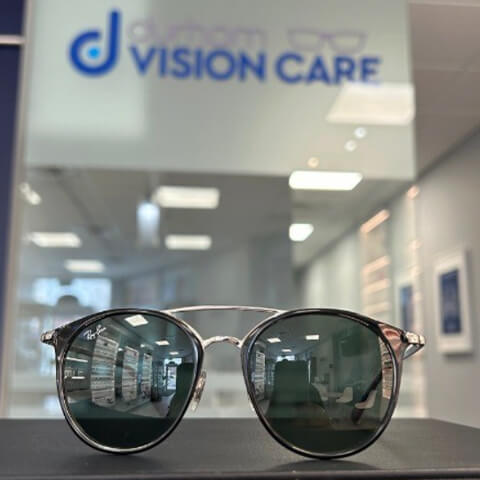
Check out our eyewear brands and find your next favourite pair.
Our Google Reviews



- Eyewear & Contacts
- Glasses
- Sunglasses
- Order Contacts
-
Durham Vision Care
- 8B-575 Thornton Rd N
- Oshawa, ON L1J 8L5
-
P: 905-240-9550
info@durhamvisioncare.com