

Key Takeaways
- Adult checkups generally last around an hour, while kids typically finish much faster.
- Eye drops and lens fittings can add extra time to your visit.
- Your preparation helps our team complete the checkup smoothly.
- You may need transit arrangements if the eye doctor dilates your pupils.
Between work, family responsibilities, and everything else on your calendar, finding time for an eye exam can feel like one more thing to fit into a busy day. Understanding how long the appointment will take can help you plan ahead and arrive with confidence.
Most routine eye exams take between 30 and 60 minutes, although the exact length varies depending on your vision needs, eye health, and whether extra tests are required.
Time Estimates for Your Eye Exam
Typical Timeframes for Adults and Seniors
Most comprehensive eye exams for adults and seniors take between 30 and 60 minutes. During your appointment, your optometrist will assess your vision, evaluate your eye health, and discuss any concerns that may affect your daily activities. The exact length of the visit can vary depending on your medical history, whether you’re a new patient, and whether additional testing is needed to investigate specific symptoms or eye conditions.
Average Duration for Kids
Children’s eye exams are often shorter, typically lasting between 15 and 45 minutes. The appointment is tailored to your child’s age and stage of development, using age-appropriate tests to assess visual skills and eye health. While many visits are completed quickly, additional testing may be recommended if there are concerns about vision development, learning-related vision issues, or other eye health needs.
Factors That Can Change Your Appointment Length
Pupil Dilation Procedures
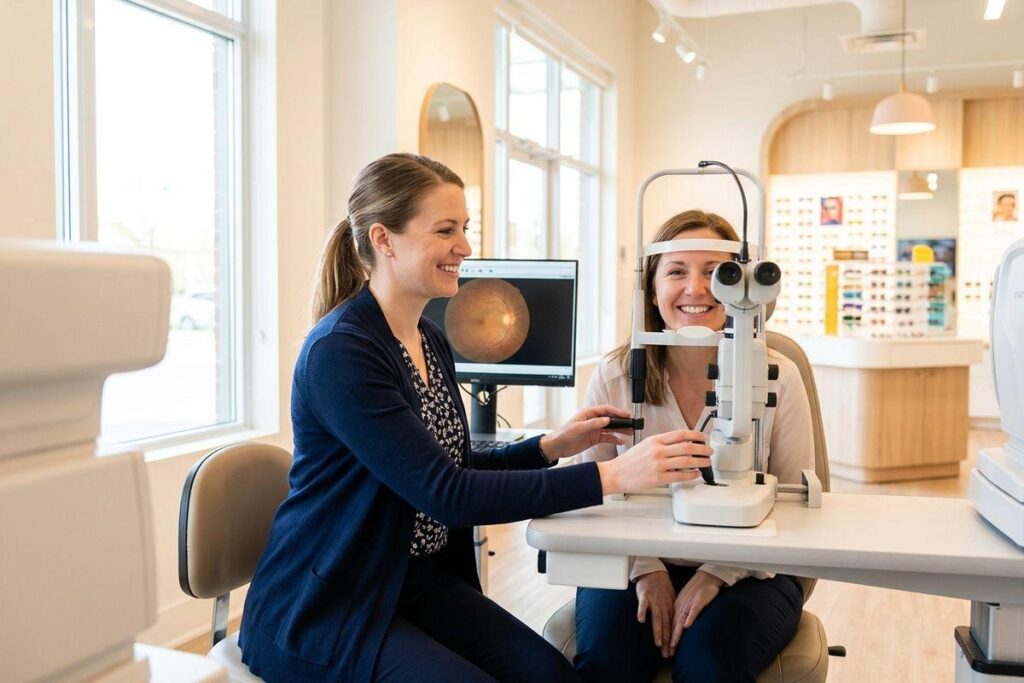
Not every eye exam includes dilation, but your optometrist may recommend it to get a more detailed view of the retina, optic nerve, and other structures inside the eye. Because the drops take time to work, dilation can add extra time to your appointment.
- Dilating drops can take up to 30 minutes to fully open the pupils.
- The procedure helps your optometrist detect signs of eye disease and other changes that may not be visible during a standard exam.
- Your vision may remain blurry and sensitive to light for a few hours afterward.
Contact Lens Exams and Trials
A contact lens fitting typically takes longer than a standard eye exam because additional measurements and assessments are required. The goal is to make sure your lenses fit properly, provide clear vision, and remain comfortable throughout the day.
- Your optometrist may assess tear film quality to help determine the most suitable lens type.
- Follow-up appointments are often recommended to confirm the fit and performance of your lenses.
Common Tests Performed at the Clinic
Visual Acuity and Refraction
One of the most familiar parts of an eye exam is the visual acuity and refraction assessment. During this test, you’ll read letters or symbols from a chart while your optometrist switches between different lens options to determine which prescription provides the clearest vision. The assessment may also include tests of how well your eyes work together and an evaluation of your near vision for activities such as reading or computer use.
The results help your optometrist determine whether you need a new prescription and identify the lens power best suited to your daily needs.
Overall Eye Health Assessments
A comprehensive eye exam goes beyond checking your prescription. Your optometrist will also evaluate the overall health of your eyes using specialized equipment. This may include measuring eye pressure to screen for glaucoma, assessing your peripheral vision and eye movements, and examining the retina, optic nerve, and blood vessels at the back of the eye.
These tests can help detect early signs of eye disease and other health concerns before noticeable symptoms develop.
Steps to Prepare for Your Visit
A little preparation can help your appointment run smoothly and give your optometrist the information needed to assess your vision and eye health accurately.
Before Your Appointment
There is usually no special preparation required for a routine eye exam. However, a few simple steps can help you get the most out of your visit:
- Bring any glasses, sunglasses, or contact lenses you currently use.
- Be prepared to discuss any recent changes in your vision or eye comfort.
- If you’re a contact lens wearer, ask your clinic whether you should wear your lenses to the appointment or bring them with you.
- Consider arranging transportation if you expect your eyes may be dilated during the exam.
What to Bring
Having the following items ready can help save time during check-in and keep your records up to date:
- Your current glasses and contact lens information
- A list of medications you take regularly
- Relevant medical history or recent health changes
- Notes about any symptoms, vision concerns, or questions you’d like to discuss
- Your health card, insurance information, or other required documentation
Post-Exam Guidelines and Driver Safety
If your eyes are dilated during your exam, you may notice temporary changes in your vision afterward. Bright lights can feel more intense, and your vision may be slightly blurry until the drops wear off. Planning ahead can help you stay comfortable and get home safely.
Sensitivity to Light
Dilation can make your eyes more sensitive to sunlight and bright indoor lighting. Most effects improve within a few hours, but these tips can make the transition easier:
- Bring sunglasses to wear after your appointment, especially if you’ll be outside.
- A hat with a brim can provide extra shade and reduce glare.
- Give your eyes time to adjust before returning to activities that require clear vision.
Transportation Plans
Depending on your vision after dilation, driving may not be comfortable or recommended right away. Consider your transportation options before your appointment:
- Arrange for someone to drive you home if you expect to be dilated.
- Use public transportation if driving is not a good option.
- Follow your optometrist’s advice about when it is safe to resume driving.
Come See Us
Durham Vision Care delivers professional and patient-centred eye care to families across Oshawa and the Durham Region. Our clinic environment is bright and open to help make every visit feel comfortable. You can trust our friendly staff to provide an individualized treatment plan without any pushy sales tactics. Call our clinic today to schedule an appointment for your whole family.