


Key Takeaways
- Flipped lenses may feel scratchy and move around on your eye too much.
- A quick visual check from the side of the lens reveals whether the shape looks like a bowl or a cup.
- Laser numbers and tinted edges can provide helpful clues for correct placement.
- Flipping a lens back takes seconds with clean hands and fresh solution.
You wake up and start your normal morning routine. You reach for your lens case and carefully place a fresh contact on your eye. You blink once and immediately feel a sharp scrape against your eyelid. That uncomfortable sensation may mean your lens is sitting backward. If you struggle with uncomfortable lenses, our team at Durham Vision Care can help. A proper contact lens exam helps your lenses fit comfortably and safely on your eyes.
You can tell if your contact lens is inside out by checking for a scratchy feeling in your eye, looking at the lens shape from a side angle, or reading the tiny laser numbers on the edge.
Signs Your Contact Lens Is Inside Out
Soft contact lenses are precision-engineered to match the natural curvature of your eye. When a lens is inside out, it creates a physical mismatch, often leading to immediate discomfort or vision issues. Because the eye is highly sensitive, you will usually notice these symptoms right away.
If you experience persistent or severe pain, please contact our team for urgent care.
Look for these common indicators that your lens is inverted:
- Persistent discomfort: The most common sign is a scratchy, irritated feeling, much like a lash trapped under your lid.
- Excessive movement: If the lens feels unstable, slides around, or shifts out of place every time you blink, it is likely inside out.
- Blurry vision: Because the lens isn’t cupped correctly, the optical center cannot sit properly over your pupil, causing your vision to appear hazy or distorted.
Simple Ways to Check Your Contact Lenses
You can catch a backward lens before it ever touches your eye. A quick physical inspection and proper daily lens care can save you from an uncomfortable morning. These manual checks work for almost every brand of soft daily or monthly contacts. You just need a few extra seconds during your insertion routine.
The Side View Shape Check
Place the soft lens directly on the tip of your dry pointer finger. Bring your hand up to your eye level to get a clear view of the edges against a bright background. This profile view gives you a great look at the curvature of the material.
- Correct lenses look like a small cup with smooth edges pointing straight up toward the ceiling.
- Flipped lenses look like a rimmed soup bowl with edges bending outward toward the floor.
The Taco Test
You can also use your thumb and forefinger to test the flexibility of the material by gently pinching the edges together. This method requires a very soft touch to avoid tearing the delicate silicone. You want to apply just enough pressure to see how the edges react to the fold.
- Correctly oriented edges point straight up toward each other like a folded hard taco shell.
- Backwards edges resist the fold and flare outward to stick against your fingertips.
Helpful Lens Markings and Tints
Manufacturers often add subtle visual guides to help you orient your lenses correctly. These tiny details disappear once the lens rests against your eye. They provide a reliable way to verify your lens position before you apply it. If you need a new brand, ask about different options during your next contact lens fitting.
Checking the Laser Markings
Many contact lens brands print microscopic identification numbers near the outer rim. While these are designed not to interfere with your vision, they serve as a helpful orientation guide. You will need a well-lit area and a steady hand to spot them.
- Inspect under light: Hold the lens up to a bright overhead light or in front of a sunny window.
- Locate the numbers: Look for faint, small numbers (such as “123”) etched near the outer edge.
- Check the orientation: If the numbers appear backward, your lens is likely inside out. Simply flip it over to correct the orientation.
Evaluating the Handling Tint
Many soft lenses feature a slight blue or green tint. While this is primarily intended to help you locate the lens in its storage case, it also functions as a visual guide for the proper shape.
- The fingertip test: Place the lens on the tip of your finger so it curves upward. Look directly down at the rim.
- Confirm the colour:
Steps to Fix a Flipped Contact Lens
Finding an inside-out lens is a minor inconvenience that often takes only seconds to resolve. You never want to force an uncomfortable lens to stay in your eye because this can lead to a serious corneal ulcer or infection. A quick cleaning routine resets the silicone for comfortable daily wear:
- Wash your hands thoroughly with mild soap and warm water before touching your eyes and lenses.
- Remove the uncomfortable lens from your eye and place it flat in the clean palm of your hand.
- Add a few drops of fresh saline solution to rinse the surface and flip the edges back to their natural shape.
Signs You Need an Eye Exam
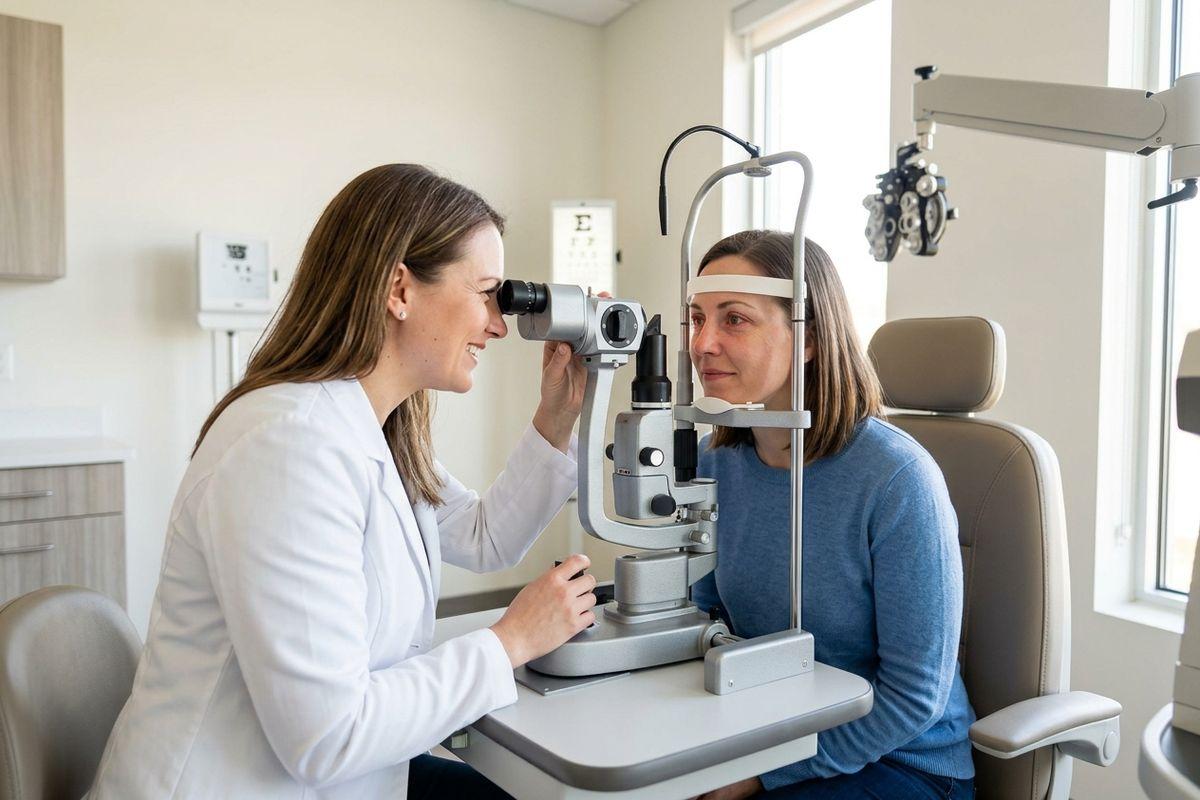
While an inside-out lens is a common cause of irritation, persistent discomfort often signals an underlying issue that requires professional care. Regular eye exams are essential to maintaining your ocular health and ensuring your vision remains sharp.
If you find that your symptoms persist after checking your lens orientation, please consider the following:
- Lingering irritation: If a scratchy or uncomfortable sensation continues long after you have cleaned and correctly repositioned your lens, it is time to consult your optometrist.
- Ongoing redness or watering: Make an appointment if you experience persistent eye redness or excessive watering that lasts for more than a few hours.
- Fit and comfort issues: If your current brand of contact lenses consistently folds over or feels perpetually dry, schedule an exam for a new fitting. Our team can evaluate you for conditions like dry eye disease and recommend options to significantly improve your daily comfort.
Comprehensive, Personalized Eye Care at Durham Vision Care
At Durham Vision Care, we believe your eye exam should be a stress-free and welcoming experience. We prioritize your long-term ocular health and comfort in a bright, modern environment, and we pride ourselves on a clinical approach that never relies on pushy sales tactics. Instead, we focus on providing individualized treatment plans tailored specifically to your unique lifestyle and daily visual needs.
Our clinic offers a full range of services, including comprehensive eye exams, precision contact lens fittings, myopia management, and targeted dry eye treatments. By using modern diagnostic tools, our team can detect potential issues early while maintaining clear, transparent communication with every patient. Whether you are looking for the perfect pair of glasses or seeking more comfortable contact lenses that truly fit your daily routine, our team is here to provide the care you deserve.
Reach out to Durham Vision Care today to schedule your next appointment and discover the difference that personalized, patient-first eye care can make.