

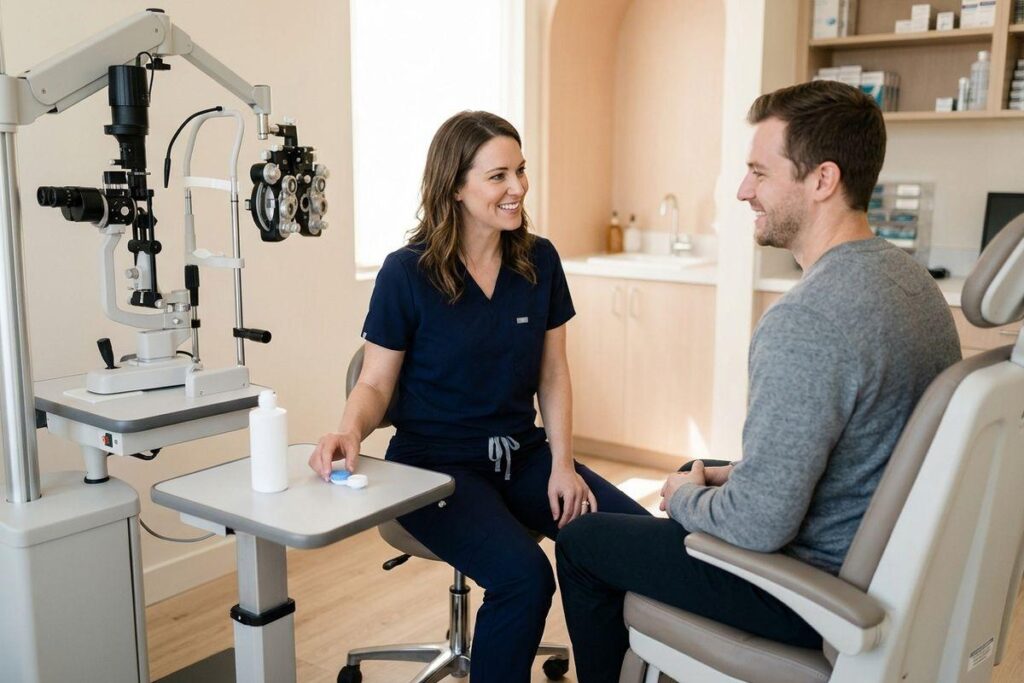
Contact lenses have many benefits. They don’t fog up when you come inside after shovelling the driveway, and they won’t slide down your nose during a hockey game. However, since they sit right on the surface of your eye, fitting them takes more care than picking out frames.
A contact lens exam starts with the same vision and eye health checks you’d get at a regular eye exam. From there, your optometrist measures the front of your eye and has you try lenses at home, so they can choose a lens that suits your eyes and your daily routine.
How a Contact Lens Exam Differs From a Regular Eye Exam
A regular eye exam looks at how clearly you see and how healthy your eyes are. That part still happens here.
The contact lens portion adds fit and sizing. Glasses sit about a centimetre in front of your eyes, while contacts rest directly on the surface. That gap can change how much lens power you need, so your optometrist calculates a separate prescription for contacts based on where the lens will sit.
What Your Optometrist Asks Before a Fitting
Expect a conversation first. We’ll ask about your health history, your job, what you do for fun, and how many hours you spend looking at screens. Someone who edits spreadsheets all day needs something different from someone who coaches soccer 3 nights a week.
Tell us how often you’d like to wear lenses, too. And if you’ve tried contacts before and gave up on them, mention what bothered you so your optometrist can rule out lenses that didn’t work.
Lens Options You May Talk About
Most people wear soft contact lenses, which tend to feel comfortable quickly. Rigid gas permeable lenses may suit people with a high prescription or certain conditions that affect the cornea, but they can come out more easily during contact sports.
Beyond the material, you’ll talk through a few other choices:
- Daily, biweekly, or monthly replacement schedules
- Soft or rigid lens materials
- Toric lenses for astigmatism
- Multifocal lenses if reading up close has become harder
Measurements and Tests You Can Expect
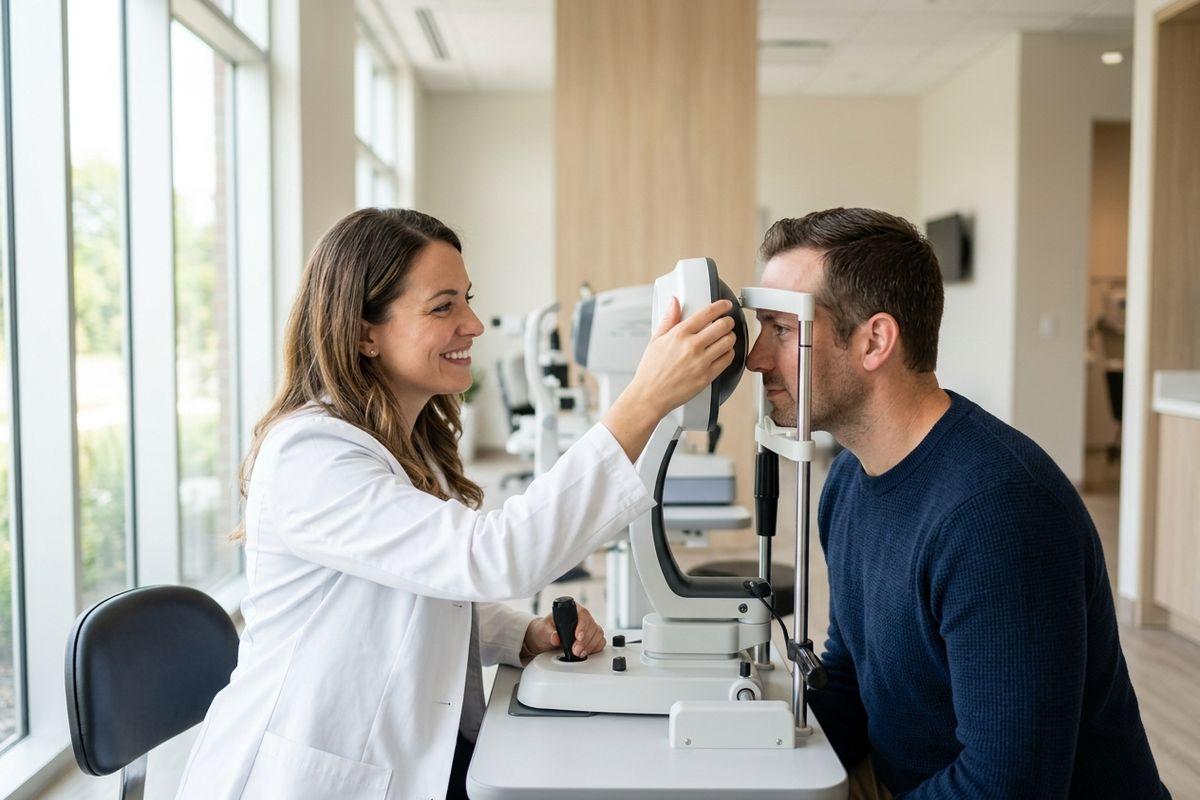
Your optometrist takes a few quick measurements of the front of your eye to work out the right lens size and shape. The cornea is the clear dome at the front of your eye. Your optometrist uses a reflection of light to map its curve. Nothing touches you, and it takes seconds. Those readings help choose the base curve and diameter of your lens so it sits properly instead of sliding around.
Your pupil and iris get measured with a small ruler, a gauge, or an automated instrument. Iris size can point toward a lens diameter, while pupil size can guide the design of multifocal lenses.
Your tears keep a contact lens moist, so your optometrist checks them with a thin paper strip or a drop of dye. If your eyes often feel dry by mid-afternoon, these results can help your optometrist choose a lens material and wear schedule that may feel more comfortable.
Trial Lenses and What Happens Next
Once the measurements are done, you’ll get to try some lenses:
- Trial lenses go in and settle on your eyes for a few minutes.
- Your optometrist checks how they sit, how they move when you blink, and how clearly you see.
- You take a trial pair home to wear for about a week.
A lens can feel fine in the exam chair and different after 8 hours at a desk. Wear your trial pair through your normal routine and note anything that bothers you, like dryness late in the day.
Inserting, Removing, and Caring for Contact Lenses
If contacts are new to you, you’ll practice inserting and removing them with someone right there beside you. Many people need a few tries, so don’t worry if your first attempt is a little clumsy. We’ll also go over cleaning and storage and how long to wear each pair before switching to a fresh one.
Follow-Up Visit
At your follow-up, your optometrist uses a slit lamp, which is a microscope with a bright light, to look at the surface of your eye and how the lens sits on it. If something felt off during your trial week, you can try a different lens before your optometrist finalizes your prescription.
Who May Not Be a Good Fit for Contact Lenses
Strong dryness, ongoing irritation, or certain surface concerns can make contacts uncomfortable. If that sounds like you, we’ll talk through other options rather than pushing a lens you’d rather not wear.
How Often You Need a Contact Lens Exam
Plan on a contact lens exam once a year to keep your prescription current, even if you’ve worn the same brand for years. Some eye conditions don’t come with noticeable symptoms early on, and a yearly visit can help your optometrist find changes before they affect your comfort or vision.
What’s on a Contact Lens Prescription
Your contact lens prescription lists:
- Lens brand
- Power
- Base curve
- Diameter
- Cylinder and axis, if you have astigmatism
Your glasses prescription doesn’t include the base curve or diameter, so you’ll need your contact lens prescription whenever you order lenses.
The Next Step Toward Contact Lenses
Whether you’re new to contacts or hoping for a more comfortable pair, a contact lens exam can help you find out which lenses suit you. At Durham Vision Care, we learn how you spend your days and explain each step of your fitting as we go. Bring your questions, and we’ll work through them together.
Book your contact lens exam, and we can help you find a lens that works for your eyes and your life.